

A pushback tractor is a low-profile tow vehicle that moves an aircraft back from the gate. It also tows aircraft between the ramp and hangar, using a towbar on the nose gear. For narrow-body fleets, the choice comes down to drawbar pull, ballast weight and gate fit.
Quick Answer: For narrow-body aircraft like the A320 family and Boeing 737, compare conventional pushback tractors by drawbar pull, ballast weight and the maker’s compatibility list. Victory GSE lists three narrow-body models. They are the TUG GT-35 (16,000 to 28,000 lb), JBT B250 (22,000 to 25,000 lb) and Stewart & Stevenson GT-1628 (20,000 lb).
This guide compares those three tractors side by side. It covers what the ratings mean, how weight packages change pull and which cab features matter at a busy gate. Every unit named here is currently listed in our pushback tractor inventory.
What Makes a Pushback Tractor Right for Narrow-Body Aircraft?
The right tractor has enough drawbar pull to start and control the aircraft. It also needs a deck low enough to work under the nose. Narrow-body jets need a dedicated pushback tractor, but the largest wide-body tugs are oversized for them. That middle band is where these three models sit.
Drawbar pull is the horizontal force a tractor can apply at its hitch. It is limited by engine torque and, just as much, by traction. A tractor that is too light will spin its tires before the aircraft moves. For a deeper look at pull ratings, our guide to drawbar pull and towing limits explains the idea using a smaller baggage tractor.
Weight also affects stopping. FAA towing guidance says towing speeds should be reduced according to the weight of the aircraft, because a heavier aircraft can push the tug with more force. A tractor with the right mass gives the operator control in both directions.
TUG GT-35: The Current Narrow-Body Standard
The TUG GT-35 is a conventional diesel pushback tractor built for narrow-body pushback and towing. Victory’s listing describes it as the successor to the GT-1628, with a water-cooled Deutz engine and hydrostatic steering. Our TUG GT-35 listing shows a drawbar pull range of 16,000 to 28,000 lb, depending on configuration.
Textron GSE rates the GT-35 at a maximum drawbar pull of 28,000 lb (12,727 kg). Textron also lists a deck height under 48 in (121 cm) and an open or closed three-person cab. Its published compatibility list covers the A318 through A321, the Boeing 717, 727, 737 and 757, and CRJ and E-Jet regional aircraft.

The wide pull range is the GT-35’s main advantage. A lighter setup suits regional jets and smaller A319 or 737 operations. A heavier setup reaches the top of the narrow-body range. That makes it a good pick for operators who handle a mixed fleet at the same gates.
JBT B250: Low Profile With a Comfortable Cab
The JBT B250 is a low-profile pushback tractor rated at 22,000 to 25,000 lb of drawbar pull. According to our JBT B250 listing, it comes in weight packages from 27,000 to 30,000 lb. Its pull range sits squarely in the middle of narrow-body needs.
The B250’s cab is its standout feature. It is mounted on isolators over a spring-suspended front axle, and it seats up to three crew members. A notch-back design with sloped rear fenders improves rear visibility. A tight turning radius helps in congested gate and hangar areas.
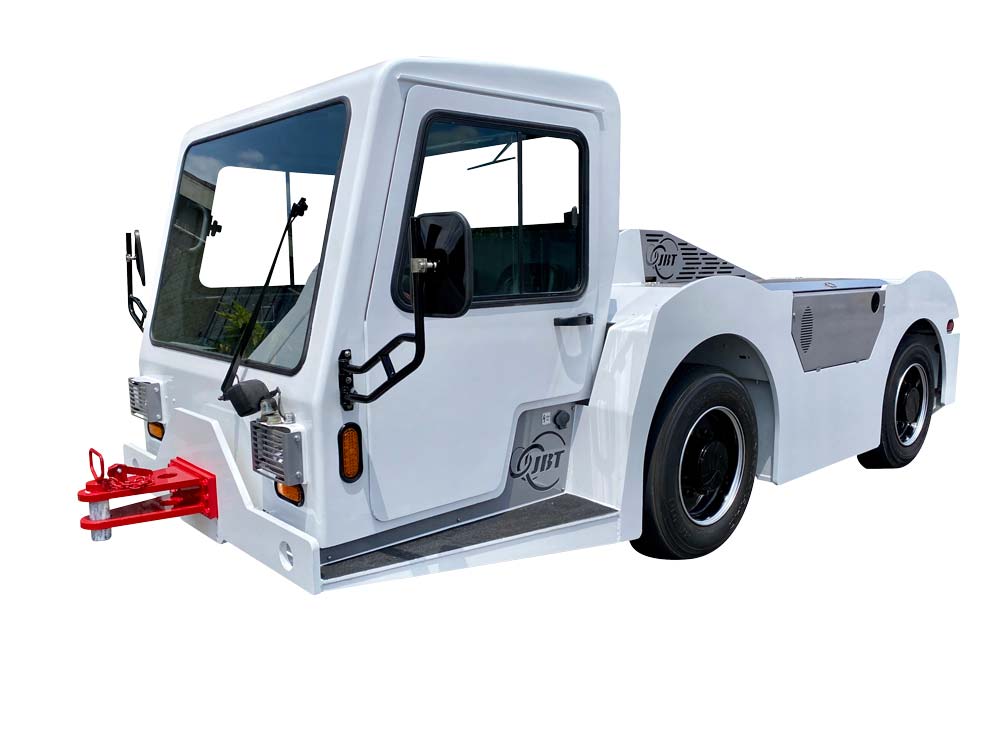
Crew seating matters more than it looks. FAA guidance says a wing walker should be stationed at each wingtip during towing. A three-seat cab lets the operator bring the walkers to the next gate in the same vehicle.
Stewart & Stevenson GT-1628: The GT-35’s Predecessor
The Stewart & Stevenson GT-1628 is the tractor the GT-35 replaced. It is rated at 20,000 lb of drawbar pull and weighs 24,000 to 28,000 lb, depending on the weight package. Our Stewart & Stevenson GT-1628 listing notes a Series 53 Detroit Diesel engine.

Because the GT-35 grew out of the GT-1628, the two share a similar role. The GT-1628 offers a single rating rather than a wide range. For steady 737 or A320 pushbacks without heavy towing, its 20,000 lb rating covers the core job.
Side-by-Side Comparison
The table below uses the figures on each Victory GSE listing, plus Textron’s published maximum for the GT-35. Specifications vary by weight package and configuration.
| Model | Drawbar pull | Tractor weight | Engine | Best fit |
|---|---|---|---|---|
| TUG GT-35 | 16,000 to 28,000 lb | Varies by package | Water-cooled Deutz diesel | Mixed fleets, regional jets through 757 |
| JBT B250 | 22,000 to 25,000 lb | 27,000 to 30,000 lb | Diesel | Busy gates, three-person crews |
| S&S GT-1628 | 20,000 lb | 24,000 to 28,000 lb | Series 53 Detroit Diesel | Steady 737 and A320 pushback |
One pattern stands out. In every case, tractor weight is higher than drawbar pull. That is no accident. Pull depends on traction, and traction depends on the weight pressing the drive tires to the pavement. When you compare weight packages, you are really comparing how much pull the tractor can put down.
Need a pushback tractor for your narrow-body gates?
Buy, rent or lease a pushback tractor from Victory GSE in Los Angeles. Tell us your aircraft types and timeline, and we will point you to the right model.
How to Choose Between Them
Start with the heaviest aircraft you push most often, then check the tractor’s compatibility list. The manufacturer’s list is the best first filter. Textron, for example, publishes the aircraft types the GT-35 is approved to handle.
Next, think about your towing profile. Short pushbacks on level ramps need less margin than long tows to a remote hangar. Wet or sloped pavement also cuts traction. If your ramp has either, lean toward a heavier weight package or a higher pull rating.
Then match the towbar. FAA guidance warns that the wrong type of towbar can damage the aircraft or injure personnel. Your tractor’s hitch and your towbar must suit each aircraft type you plan to move.
Finally, consider people and procedures. Airport operators build towing training around FAA ground vehicle operations guidance, which covers radio contact and movement-area rules. A cab that carries your full crew and gives the operator clear sight lines makes those procedures easier to follow.
Buying, Renting or Leasing a Pushback Tractor
Victory GSE sells, rents and leases pushback tractors, so you can match the arrangement to the job. Buying makes sense when a tractor will work your gates every day for years. Renting or leasing can make sense for a new route, a seasonal peak or a trial before a larger fleet decision.
Every option starts with the same conversation. Tell us your aircraft types, your gate layout and how long you need the tractor. We will help you compare the GT-35, B250 and GT-1628 against that workload.
Pushback Tractor FAQ
What drawbar pull do I need for a Boeing 737 or Airbus A320?
The three narrow-body tractors in this guide are rated between 20,000 and 28,000 lb of drawbar pull. Check the tractor maker’s compatibility list first. Textron lists the A320 family and the 737 for the TUG GT-35.
Is the TUG GT-35 the same as the Stewart & Stevenson GT-1628?
No, but they are related. The GT-35 is the successor to the GT-1628. The GT-35 offers a wider pull range, up to 28,000 lb, while the GT-1628 is rated at 20,000 lb.
Why do weight packages matter on a pushback tractor?
A tractor can only apply as much pull as its tires can grip. Added ballast presses the drive tires harder against the ramp. That is why the JBT B250’s 27,000 to 30,000 lb weight packages support 22,000 to 25,000 lb of drawbar pull.
How many crew members can ride in these tractors?
The JBT B250 seats up to three crew members, and Textron offers the GT-35 with an open or closed three-person cab. That lets the operator carry wing walkers between gates.
Can I rent or lease a pushback tractor instead of buying?
Yes. Victory GSE sells, rents and leases pushback tractors, including the models in this guide. Contact our team with your aircraft types and timeline to talk through the options.
Buy, rent or lease a pushback tractor
The TUG GT-35, JBT B250 and Stewart & Stevenson GT-1628 are listed at Victory GSE in Los Angeles. Ask us which one fits your narrow-body fleet.
